Some general comments about Argentina and driving there
Before my memory fades about this trip I promised myself to describe some of the “issues” associated with road travel in Argentina. Some of these are applicable to many countries.
Our rental vehicle was not new – it had 90,000 km (about 56,000 miles) on it when we rented it and it was manual 6 speed transmission. Our Ford Ranger (they are manufactured just outside Buenos Aires and we drove past the plant) was a relatively austere version. For example, it did not have a back-up camera – something that has been standard in the US for at least 5 years or more. Fortunately, the small 2 liter diesel engine did get very good gas mileage, since the diesel was near 5 dollars a gallon.
There are innumerable police checkpoints in Argentina. These are mostly the Highway Police. Curiously, we were never stopped at these – they waived us through. We think the rental or registration information on our windshield must have clued them in that we were OK. But drivers were stopped and papers checked at many of these. Many other checkpoints were barely staffed. We suspect many checkpoints are remnants of the military government of decades past.
Note added after we returned: We got two speeding tickets via remote camera on highway stretchs. There were quite a few of these cameras (with announcements) in parts of Argentina. We were going 70km/hr in a 60km/hr zone. This was added to our rental fee (several weeks after we returned home). We don’t know if there will be more. Somewhat annoying because we almost always drive slower than the traffic flow – but apparently most vehicles slow just for the announced speed “traps” and elsewhere go fast.
Another aspect of the roads were the innumerable speed bumps present in small towns and along the highways. These had the justification of slowing traffic near schools and pedestrian areas – and they are very effective for this. But in one small town (Soberbio) I counted more than 15 speed bumps in crossing just a portion of the town. This gets old.
Road conditions varied quite a bit. Some roads in the drier parts of northwestern Argentina were very good and comparable to good country roads anywhere. But many stretches in wetter, or flatter/agricultural regions, were quite rough, with potholes and pavement warped by the passage of many heavy trucks. We had a 4×4 pick-up and were not worried that we couldn’t make it through the roads, but the tedious nature of the poor roads took a toll on us – especially crossing the Chaco and in parts of northeastern Argentina. Even the 4-lane toll road from Cordoba to Buenos Aires had lengthy segments that were rough and the concrete stretches were jarring. (Asphalt is generally smoother since it deforms, not fractures like concrete. But asphalt tends to develop potholes more frequently and with heavy trucks the pavement gets seriously deformed.)
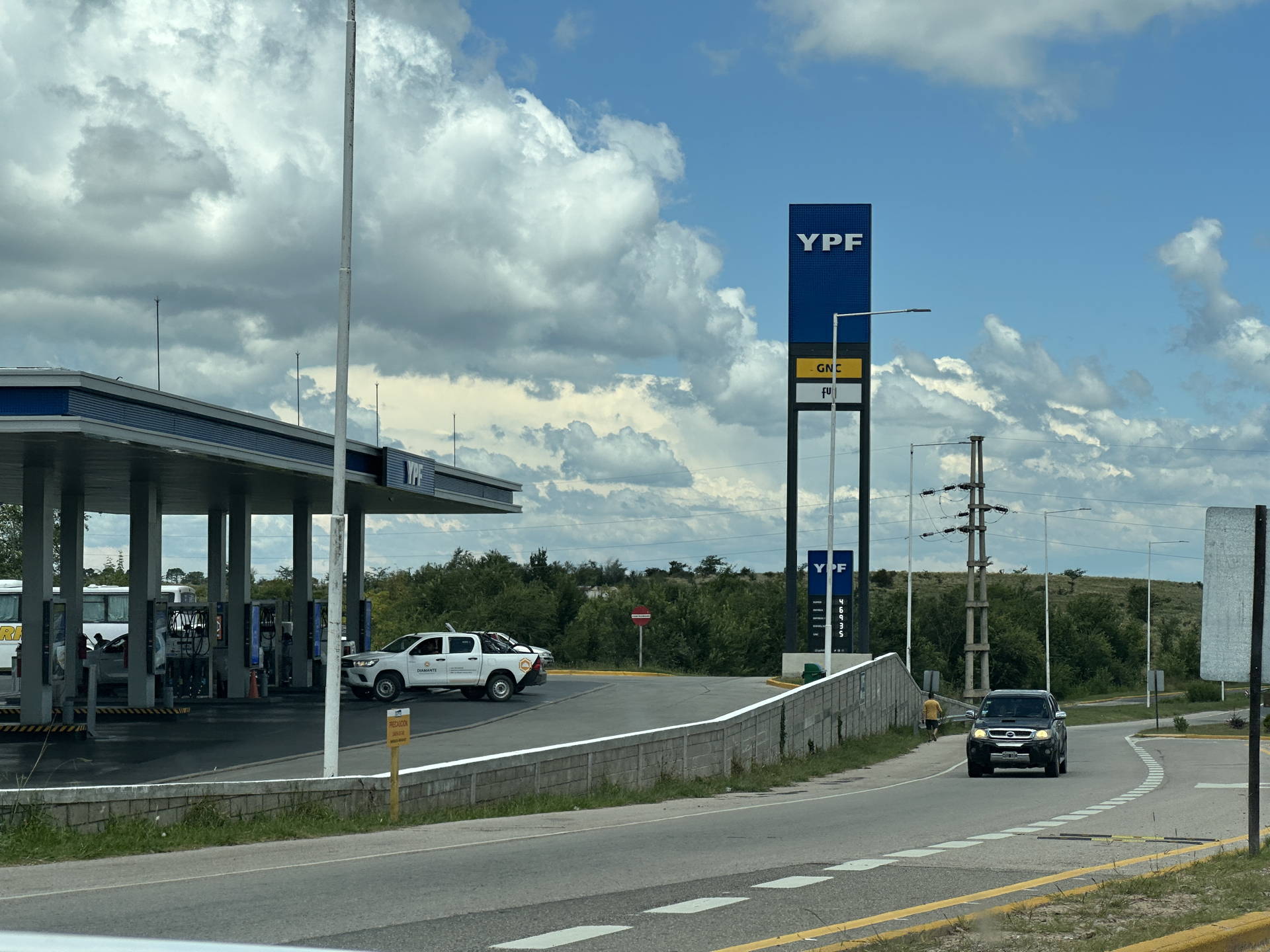
Gas stations are generally modern and all took credit cards. Many have small shops or places to eat light meals.
While not strictly related to roads, stray dogs are almost everywhere.
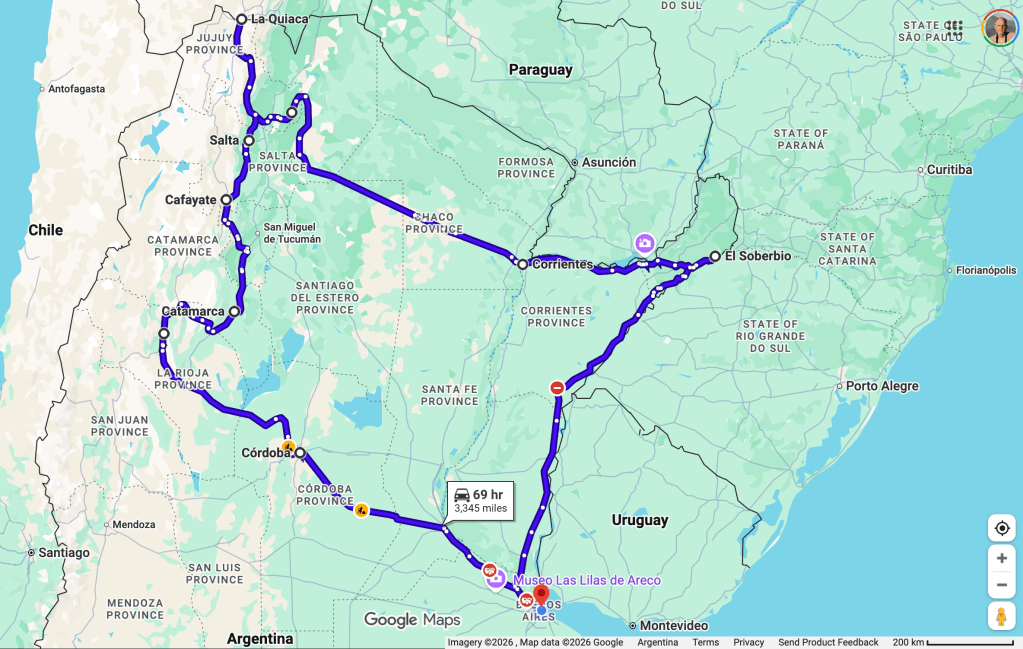
This page describes a 25 day driving trip across parts of northern Argentina from Jan 23 to Feb 17 2026. Although this looks like a lot of driving (and it was), Argentina is very large and we have never covered any places south of Buenos Aires and probably won’t for various reasons.
The rough route is shown below – its totaled about 3900 miles.
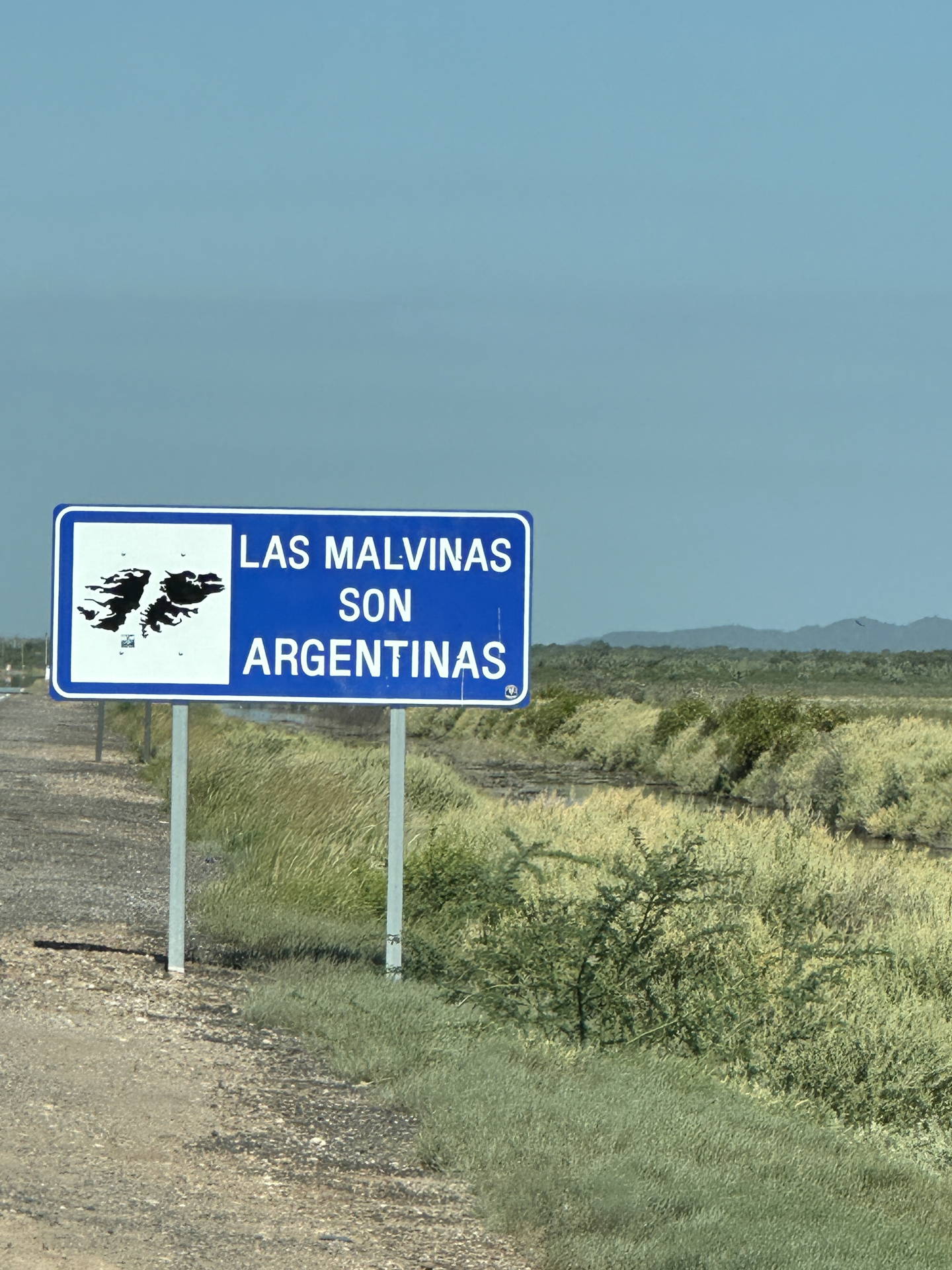
The sign below can be seen on highways all across Argentina – to not let the people forget. “The Falklands are Argentinean” would be an English translation… Some of these signs are new-ish, so it isn’t just leftovers from the 1980’s.
Food in Argentina has warning labels related to how healthy it is. The photo below shows labels on a package of cookies we bought. (The cookies weren’t very good – but maybe the labeling had something to do with it?)

The black boxes say that this package has excess of sugars, total fats, saturated fats, and calories. This is on every package sold in stores. Needless to say, most packages had such labels – very few packages of anything were “healthy”. Apparently obesity is an issue in Argentina – and they are trying to do something about it.
 THE NATURALIST'S TRAVEL PAGE